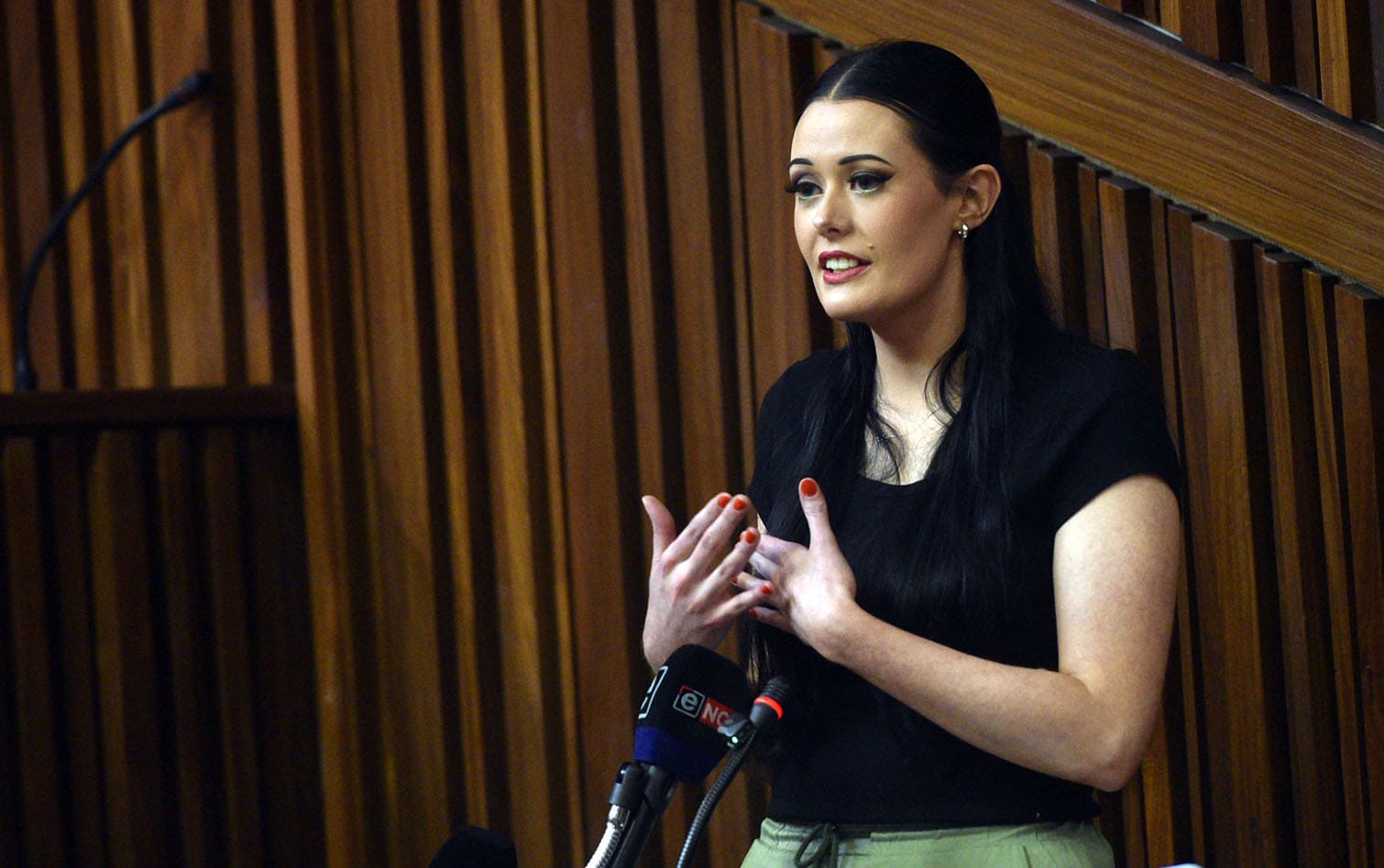
Amber Lee Hughes Trial: Text Messages Expose Contradictions in Testimony
The Johannesburg High Court has been the stage for a compelling and deeply disturbing legal battle surrounding the rape and murder of four-year-old Nada Jane Challita. At its heart lies the self-confessed killer, Amber Lee Hughes, whose testimony has come under intense scrutiny. As the matter progresses towards sentencing, prosecutors have systematically dismantled key aspects of Hughes' narrative, using her own digital footprint – text messages – to expose glaring inconsistencies and question the very foundation of her defense. This trial not only seeks justice for a heinous crime but also highlights the critical role of digital evidence in revealing the truth.
The Shifting Narrative of Amber Lee Hughes
Amber Lee Hughes, a 26-year-old former preschool teacher, stands convicted of the rape and murder of Nada Jane Challita, the daughter of her former partner, Elie Challita. The horrific incident occurred in 2023 while the child was in Hughes' care. While Hughes initially maintained her innocence, she later confessed to drowning Nada Jane in a bathtub. During her testimony in the sentencing phase, Hughes presented a narrative of desperation, claiming she was driven to commit the unspeakable act due to alleged abuse by Elie Challita. She told the court she had sacrificed everything for Challita and his daughter, asserting that her actions were, in a twisted way, an attempt to protect the child from potential neglect if she had left the relationship, leaving Nada without a mother figure.
Her account painted a picture of a woman pushed to her limits, acting out of a distorted sense of duty and victimhood. However, this carefully constructed defense began to unravel under the rigorous cross-examination led by Prosecutor Rolene Barnard, who masterfully used text messages as a potent weapon to expose the fragility of Hughes’ claims. The stark contrast between Hughes' courtroom testimony and her contemporaneous communications revealed a deeply troubling pattern of manipulation and contradiction.
Text Messages Unveiled: Undermining Claims of Abuse
The turning point in the cross-examination came with the introduction of specific text messages sent by Amber Lee Hughes herself. These digital snippets, often raw and unfiltered, offered a window into her mindset and the nature of her relationship with Elie Challita at the time the alleged abuse was occurring. Prosecutor Barnard challenged Hughes directly on her claims that she was a victim of abuse and that her actions were in Nada's "best interests."
One particular text message, sent by Hughes to Challita, stood out:
“If she asks me and my assistant, we will have nothing but positive things to say about you, my love heart emoji. Do you agree with that? Do you still stand by that?”
Barnard pointed out the obvious contradiction: how could Hughes claim to have been subjected to severe abuse, leading her to the point of murder, while simultaneously sending affectionate messages expressing a willingness to speak positively about her alleged abuser? The message, punctuated with a "love heart emoji," painted a vastly different picture from the victim narrative Hughes was presenting in court.
Hughes' response to this direct challenge was to claim that Challita was "still a parent of one of my pupils," and therefore she "wouldn’t have discussed any of the matters that were happening at the school with him, especially in regard to welfare being involved." This explanation, however, strained credulity. The intimate and positive tone of the message, rather than a professional one, suggested a different dynamic entirely, further eroding her credibility and highlighting the profound inconsistencies unveiled in Amber Lee Hughes' murder conviction.
Beyond Personal Conflict: Questioning Motive and Child Welfare Claims
The prosecutor didn't stop at just debunking the abuse claims. Barnard also meticulously questioned Hughes' assertions regarding Nada's alleged unsafe living conditions. Hughes had presented herself as the child's protector, implying that Challita's care was substandard. However, evidence presented by the State suggested a different motivation. Barnard argued that Hughes' concerns about Nada’s welfare only seemed to surface following arguments or disputes with Challita, rather than being consistent, genuine worries for the child's safety.
This pattern of behavior was further reinforced by another crucial piece of digital evidence: a message sent by Elie Challita to Hughes after she had posted his personal information and damaging allegations about him on Facebook. Challita’s message read:
“Every time you're not feeling well, I have to pay for it with my life, my peace, with mine and my child's safety and well-being. Only to find out that you have been stealing from me and my child since the day you entered my house.”
Barnard powerfully contended that this message, along with others, established a clear pattern: whenever Amber Lee Hughes was unhappy or felt slighted, there were severe, often punitive, consequences for Challita and, tragically, for his young daughter. This suggested a motive rooted in personal grievance and retribution, rather than a benevolent, albeit misguided, attempt to safeguard a child. It painted a picture of a volatile relationship where Challita and Nada were vulnerable to Hughes' emotional fluctuations.
The defense team, in a bid to mitigate the damage caused by these revelations, requested a postponement to consult with Hughes on the context of the text messages. However, the court questioned the relevance of this request, noting that Hughes had not denied the authenticity of the messages and they had already been admitted into evidence. This judicial skepticism underscored the significant weight the court placed on these digital records.
The Broader Implications: The Role of Digital Evidence in Justice
The trial of Amber Lee Hughes serves as a stark reminder of the ever-increasing importance of digital evidence in contemporary legal proceedings. In an age where personal communication largely occurs through text messages, emails, and social media, individuals leave behind a vast digital footprint. For prosecutors and defense attorneys alike, these digital trails can be invaluable. Text messages, in particular, offer a contemporaneous and often unfiltered record of thoughts, feelings, and interactions at the time they occurred, making them powerful tools for corroborating or discrediting testimony given months or years later in court.
- Authenticity and Immediacy: Unlike recollections, which can be influenced by time, trauma, or strategic intent, digital messages possess a high degree of authenticity. They capture moments as they happened, providing immediate insights into a person's state of mind or the nature of a relationship.
- Pattern Recognition: As seen in the case of former teacher Amber Lee Hughes, a series of messages can reveal patterns of behavior, manipulation, or emotional volatility that might otherwise be difficult to prove. They can establish timelines, motivations, and the progression of relationships or conflicts.
- Credibility Assessment: When courtroom testimony directly conflicts with an individual's own written words from the past, it significantly impacts their credibility. This discrepancy can sway a judge or jury, as it suggests a deliberate attempt to mislead the court or a lack of candor.
- Forensic Power: Digital forensics has become a crucial field, enabling legal teams to retrieve messages, verify their origin, and present them in a clear, undeniable format. This ensures that what is presented in court is accurate and reliable.
While contextual interpretation of text messages can sometimes be challenging – tone can be misinterpreted, or a message might be part of a larger, unstated conversation – their raw nature often cuts through elaborate defenses. In trials involving serious crimes like murder, such digital evidence can be the linchpin that either strengthens the prosecution's case or completely undermines the defense's narrative, guiding the court toward a more accurate understanding of events and motives.
Conclusion
The trial of Amber Lee Hughes is a tragic and complex case, but the role of text messages has brought a critical layer of clarity to the proceedings. The contradictions exposed between Hughes' tearful courtroom testimony and her own digital communications have cast significant doubt on her claims of abuse and her supposed selfless motives. As the court moves closer to determining a fitting sentence for the rape and murder of Nada Jane Challita, the weight of this digital evidence will undoubtedly play a crucial role. It underscores the undeniable power of our digital footprints to reveal truths, even when individuals attempt to obscure them, ensuring that justice can be pursued with greater integrity and accuracy in the modern age.